
What is diversification and why does it matter for your money?
Knowledge Centre • 11 Nov 2026
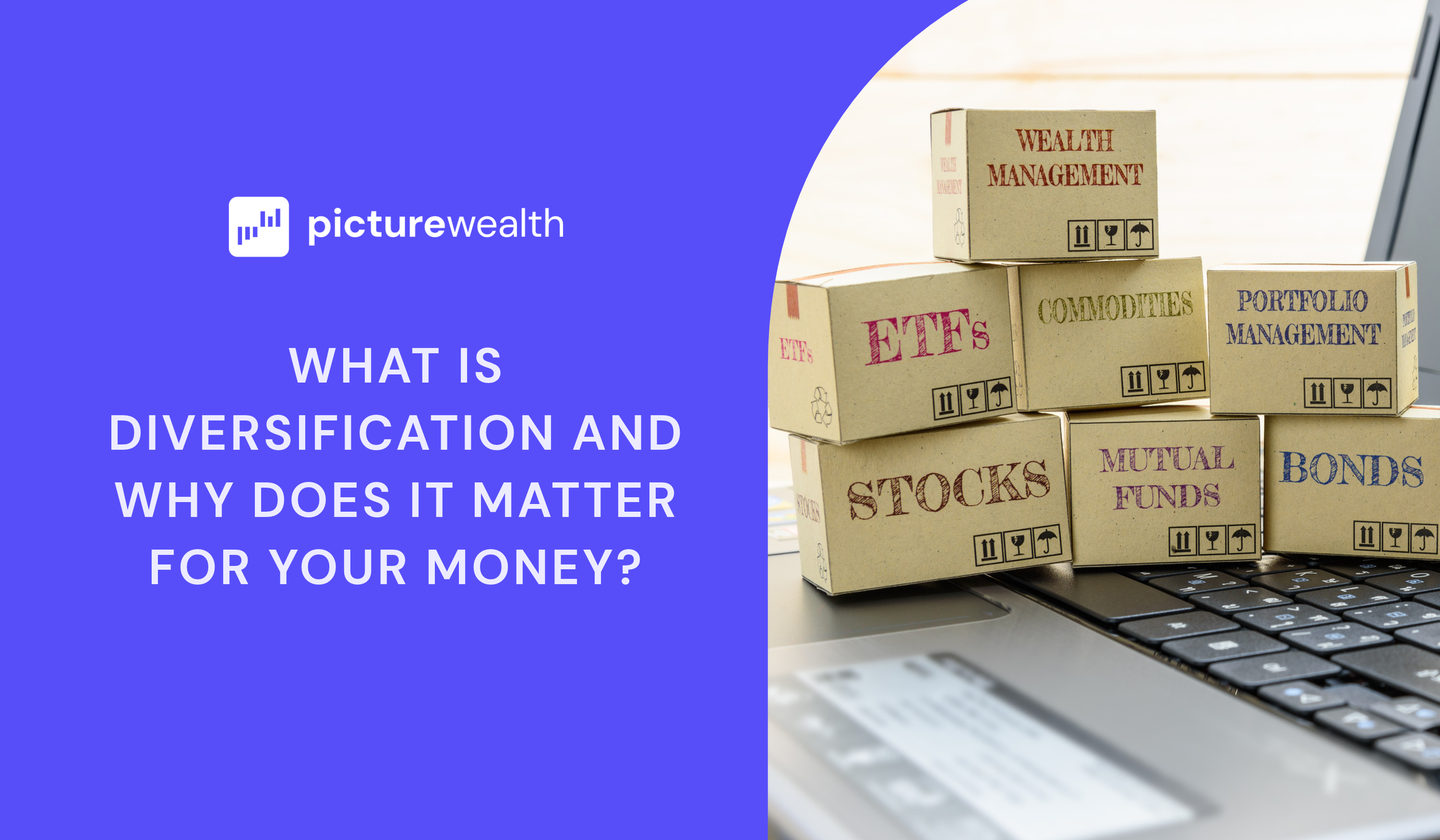
Financial markets are influenced by interest rates, inflation, economic conditions, and company performance. These factors can affect investments differently, making diversification an important consideration when developing a long-term financial strategy.
Investment diversification involves spreading money across different assets, industries and markets to reduce reliance on any single investment.
Understanding diversification can help you assess investment risk, interpret market movements and consider whether your portfolio remains aligned with your financial goals.
Key takeaways
- Diversification helps manage risk by spreading investments across different assets, industries and markets.
- Different investments respond differently to changing economic conditions.
- Holding multiple investments does not automatically mean a portfolio is diversified.
- Diversification cannot eliminate investment risk or guarantee positive returns.
- An appropriate investment mix depends on your goals, timeframe and tolerance for risk.
What is diversification in investing?
Diversification is an investment strategy that spreads exposure across different assets, companies, industries or markets to reduce the impact of poor performance in any single investment.
A diversified portfolio may include shares, property, bonds and cash, each with different risk and return characteristics.
For example, interest rate changes may affect property values, bond prices and cash returns differently. Similarly, Australian and international share markets may perform differently over the same period.
The objective is not to eliminate market fluctuations but to manage exposure to different sources of risk.
ASIC's Moneysmart guide to investment diversification provides further information.
Why is diversification important?
Investment values change in response to economic conditions, company performance and market expectations.
When a portfolio is concentrated in one company or sector, developments affecting that area may have a greater impact on its overall value.
For example, an investor holding shares exclusively in Australian mining companies may be particularly exposed to changes in commodity prices.
Spreading investments across different industries and asset classes can reduce reliance on a single sector, although broader market movements may still affect multiple investments simultaneously.
For further context, read What does the market really mean?.
How does investment diversification work?
Diversification can occur across several dimensions.
Across asset classes
Different asset classes have distinct risk and return characteristics:
- Shares: Ownership in companies, offering potential capital growth and dividend income.
- Property: Exposure to property markets, potentially providing rental income and capital growth.
- Fixed interest: Investments such as government and corporate bonds, which may provide income but remain subject to interest rate and credit risks.
- Cash: Savings accounts and term deposits, generally offering lower short-term volatility but exposure to inflation risk.
Holding a combination of asset classes may reduce dependence on any single category.
ASIC's guide to choosing investments explains these investment types in more detail.
Across industries and geographic markets
Companies operating in banking, healthcare, technology and resources face different commercial risks.
Similarly, Australian and international markets may respond differently to economic developments.
Investing across industries and countries can broaden exposure, although international investments may introduce additional currency and geopolitical risks.
Within individual asset classes
Diversification can also involve holding different companies or assets within the same investment category.
Managed funds and exchange-traded funds (ETFs) may provide access to multiple investments, but the level of diversification depends on their underlying holdings
Can you own several investments and still not be diversified?
Yes. The number of investments held does not necessarily reflect how diversified a portfolio is.
Consider an investor who owns shares in several Australian banks.
Although these are different companies, they operate within the same industry and may be affected by similar economic and regulatory developments.
Likewise, two ETFs may hold many of the same underlying companies, creating investment overlap.
Understanding these exposures can help identify whether a portfolio is genuinely diversified or concentrated in particular sectors or markets.
ASIC's questions to ask before investing provide a useful starting point.
Does diversification protect investments when markets fall?
Diversification can help manage certain investment risks, but it cannot prevent losses.
During significant market downturns, multiple asset classes may decline simultaneously.
For example, shares and bonds can both experience losses under particular economic conditions, including periods of rising interest rates.
Our article What is a bond yield and why does it matter? explains how interest rates and bond prices are connected.
Diversification is a risk-management strategy, not a guarantee of investment returns or protection against every market downturn.
How does diversification work in superannuation?
Many Australian superannuation funds offer investment options containing combinations of shares, property, fixed interest and cash.
These options may be described as balanced, growth or conservative, although their asset allocations and risk characteristics vary between funds.
A single superannuation account may therefore provide exposure to numerous underlying investments.
Understanding your selected investment option, its asset allocation and associated risks can help you assess how your superannuation fits within your broader financial strategy.
Learn more in our guide to how your super is invested.
Frequently asked questions
What is diversification in simple terms?
Diversification means spreading investments across different assets, companies, industries or markets to reduce reliance on any single investment.
What is an example of investment diversification?
A portfolio containing Australian shares, international shares, bonds and cash is an example of diversification across asset classes and markets. Its effectiveness depends on the underlying holdings and allocations.
What is the difference between diversification and asset allocation?
Asset allocation determines how investments are distributed between asset classes. Diversification spreads exposure across different investments and sources of risk.
The US Securities and Exchange Commission's investor education guide explains how these concepts work together.
Can diversification prevent investment losses?
No. Diversification may reduce exposure to individual investment risks, but it cannot eliminate market risk or guarantee positive returns.
Is diversification important for superannuation?
Diversification can help manage investment risk within superannuation. However, the level of diversification depends on the selected investment option and its underlying holdings.
Understanding your broader financial picture
Diversification is one component of an investment strategy. Your financial goals, investment timeframe, risk tolerance and overall financial circumstances are equally important.
Understanding how your investments are structured can support more informed decisions about your financial future.
At PictureWealth, our financial advisers can help you review your investment strategy, understand your exposure to risk and assess whether your financial plan remains appropriate for your circumstances.
Review your financial strategy
General information disclaimer: This article contains general information only and does not take into account your personal objectives, financial situation or needs. Consider whether the information is appropriate for your circumstances and seek professional advice where necessary. All investments involve risk, and past performance is not a reliable indicator of future performance.